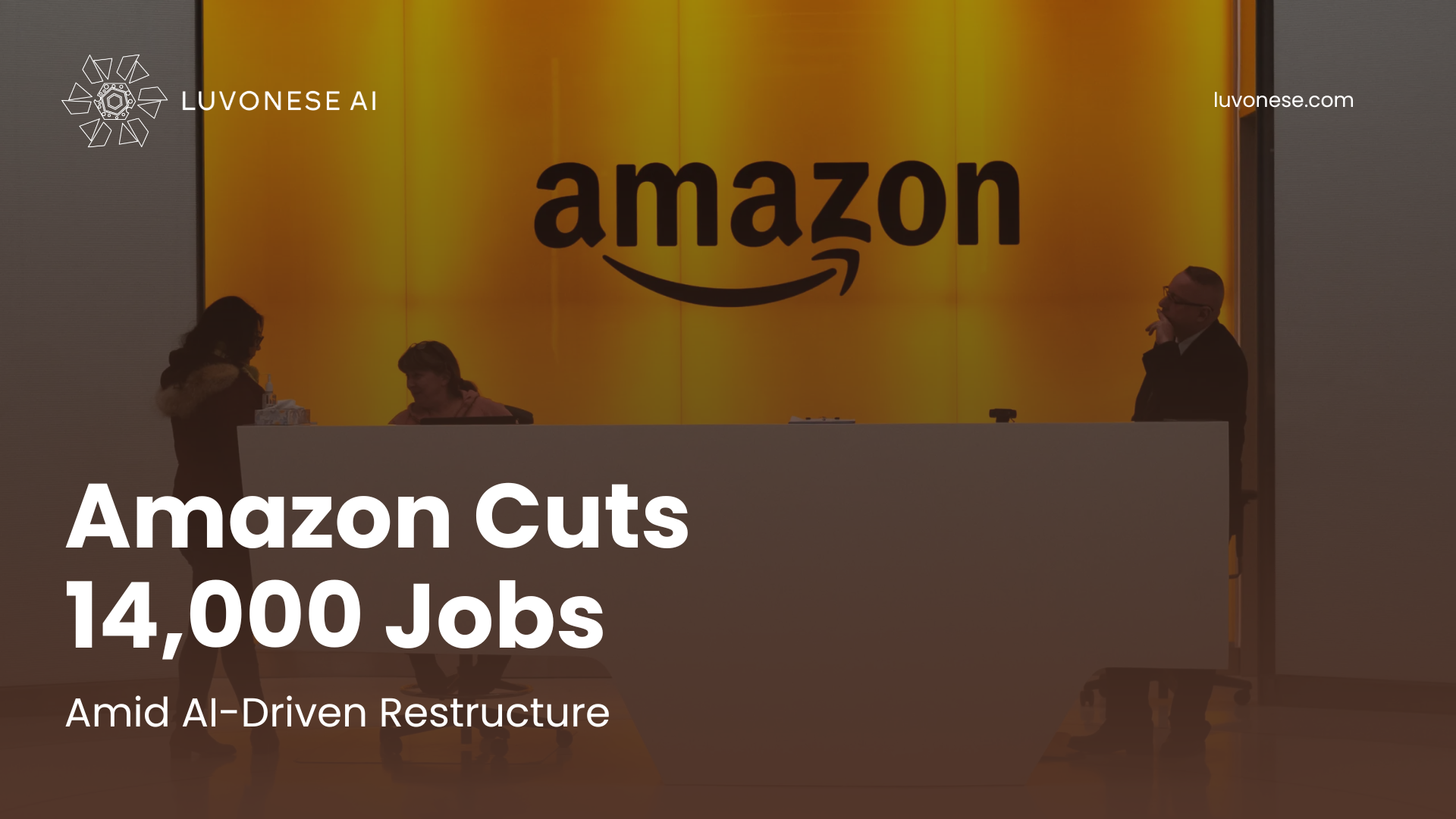
The tech world has entered another wave of restructuring — and Amazon is the latest giant to make headlines. Following similar moves from Google, Meta, and Microsoft, the e-commerce titan announced plans to lay off around 14,000 corporate employees worldwide.
While layoffs are never easy, Amazon says this decision is not merely about cutting costs. Instead, it’s part of a long-term effort to reorganize the company around speed, efficiency, and artificial intelligence (AI). In the words of CEO Andy Jassy, Amazon must “operate leaner and move faster” to stay competitive in an AI-driven marketplace.
These changes illustrate a broader transformation sweeping through global business — where automation, machine learning, and digital agility are redefining how companies scale, hire, and grow.
What’s Happening at Amazon
Amazon confirmed that about 4 % of its corporate workforce — roughly 14,000 roles — will be eliminated. AP News
The cuts span several departments, including human resources, administrative teams, and selected technical roles.
In an internal memo, leadership emphasized that the restructuring was designed to “reduce layers, accelerate decision-making, and focus on customer-impact areas.” About Amazon
Despite this, Amazon continues to post solid financials. That paradox — cutting jobs amid profitability — underscores a shift from growth at all costs to growth through efficiency.
Why Now? The AI and Efficiency Angle
Artificial intelligence sits at the heart of Amazon’s new strategy. The company has invested heavily in generative AI tools, logistics automation, and smart supply-chain systems.
As these technologies mature, certain roles become redundant while new ones emerge.
Jassy has previously noted that AI will streamline processes and “enable smaller teams to achieve bigger outcomes.” Washington Post
The focus is shifting from manpower to machine-power — with human creativity complementing algorithmic precision. This mirrors a larger movement across industries, as corporations embrace digital transformation to remain competitive in uncertain markets.
Impact on Employees and Internal Process
The layoffs come with transition support, including severance packages, health-care coverage, and career assistance depending on local laws. Employees are also being encouraged to apply for internal transfers — often within a 90-day window. About Amazon
Interestingly, Amazon plans to continue hiring in high-growth segments like AI, robotics, cloud computing, and digital advertising. The Verge
This duality — cutting some teams while expanding others — reflects how the future of work is being rebalanced inside large tech firms.
Which Units Are Most Affected?
Although Amazon hasn’t released a department-by-department list, sources close to the company say the layoffs affect corporate offices and Amazon Web Services (AWS) in particular. Reuters
AWS has seen tremendous success over the past decade, but recent reviews identified overlapping management structures and underused support teams. According to GeekWire, these adjustments aren’t necessarily performance-related — rather, they’re aimed at realigning operations for upcoming AI-cloud integration.
A Wider Tech-Industry Trend
Amazon’s move is part of a broader industry correction. Over the last two years, major tech companies have laid off more than 400,000 employees globally, according to Layoffs.fyi.
Tech firms are no longer simply hiring for scale; they’re hiring for precision. AI, automation, and data analytics have made it possible to achieve more with fewer hands.
This isn’t about shrinking ambition — it’s about recalibrating it.
For example, Amazon’s competitors are now experimenting with smaller, cross-functional teams supported by AI copilots — a model that reduces bureaucracy and speeds up product cycles.
Implications for Tech Talent
For professionals, this moment is both uncertain and full of possibility.
Routine roles will fade, but AI-related skills — like prompt engineering, data analytics, and AI ethics — are skyrocketing in demand.
A LinkedIn Learning report found that AI literacy has entered the global top-five most sought-after competencies. Employers are also prioritizing emotional intelligence, adaptability, and creativity — skills that machines can’t replicate.
For displaced Amazon workers, these transitions might open new doors in startups, research labs, or agencies building AI-first products and platforms.
Lessons for Businesses
For Businesses , Amazon’s reorganization offers valuable insights:
- Agility is power. The ability to adapt quickly to technological shifts defines long-term survival.
- Automation should amplify, not replace. Smart use of AI enhances creativity, productivity, and customer experience.
- Upskilling is non-negotiable. Every team member should develop digital and analytical literacy to stay competitive.
- Data-driven design. Future websites and campaigns must integrate analytics and personalization powered by AI engines.
The Bigger Picture: Change and Opportunity
Ultimately, Amazon’s layoffs mark more than a workforce reduction; they symbolize a cultural reset for modern corporations.
The message is clear — adapt or fall behind. Companies that master AI integration while keeping human creativity at the center will thrive in the next decade.
For workers, the challenge is to reskill and reposition. For businesses, it’s to innovate and restructure intelligently. And for businesses, it’s to help organizations navigate this digital storm with clarity and confidence.