
Overview of the Agreement
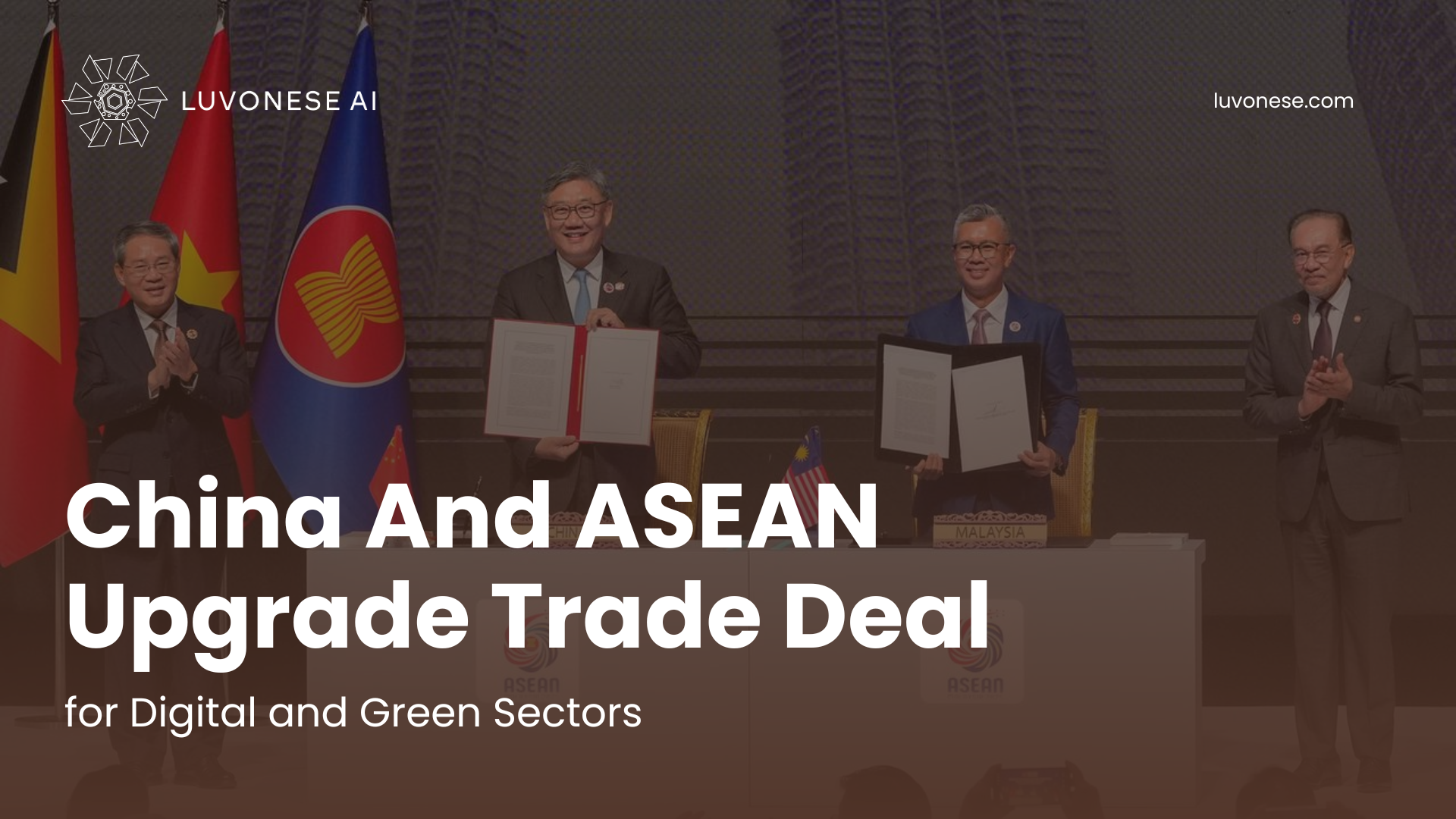
China and the Association of Southeast Asian Nations (ASEAN) have signed an upgraded free trade pact aimed at modernizing economic cooperation. The agreement introduces new frameworks for digital trade, the green economy, and the pharmaceutical sector.
According to a report from Reuters, this upgraded pact builds upon the original ASEAN-China Free Trade Area (ACFTA) and is expected to deepen economic integration across the Asia-Pacific region.
Key Objectives of the Updated Pact
The deal focuses on enhancing supply-chain connectivity, reducing trade barriers, and encouraging investment among member states. It updates existing rules of origin, simplifies customs procedures, and promotes greater transparency in cross-border trade.
The modernization of the pact also includes mechanisms to resolve trade disputes more efficiently. To understand how digital automation supports trade governance, visit Luvonese.com for insights into AI-driven policy analytics.
Inclusion of Digital and Green Economy Chapters
For the first time, digital trade and sustainability are central to the agreement. The digital economy provisions cover data flow governance, cybersecurity cooperation, and e-commerce facilitation. Meanwhile, the green economy chapter encourages collaboration on renewable energy, waste reduction, and sustainable industrial practices. ASEAN policymakers are expected to adopt new digital transformation models similar to those offered by Luvonese Agency to enhance their online economic ecosystems.
Benefits for ASEAN Members
ASEAN countries, including Indonesia, Thailand, Vietnam, and Malaysia, stand to benefit from reduced tariffs, more predictable market access, and improved logistics coordination. The pact enhances the region’s competitiveness by positioning ASEAN as a stable manufacturing and export hub amid global supply-chain disruptions. Businesses across Southeast Asia are encouraged to use modern workflow tools such as Productivity Apps to improve cross-border collaboration and operational efficiency.
Strategic Implications for China and the Region
For China, this upgraded trade framework helps strengthen its role as ASEAN’s largest trading partner and counterbalance U.S. tariff pressures. It also reinforces Beijing’s diplomatic strategy to deepen regional influence through trade and infrastructure initiatives such as the Belt and Road. Analysts from East Asia Forum note that this agreement may redefine Asia’s economic leadership over the next decade.
Impact on Indonesia
Indonesia could gain substantially from the agreement through increased investment in manufacturing, digital infrastructure, and sustainable energy. By aligning with ASEAN standards, Indonesia can expand export opportunities for electronics, palm oil derivatives, and green technologies. The pact may also attract new foreign direct investment (FDI) into the country’s logistics and industrial sectors, strengthening its role as a key player in Southeast Asia’s trade network.
Global Trade Context
The deal comes amid a volatile global environment marked by U.S.-China trade frictions and supply-chain realignments. Experts believe this development reinforces Asia’s growing self-reliance and resilience in global trade networks. In comparison, analyses by Brookings Institution highlight similar moves in regional trade diversification as economies adapt to global protectionism.
Next Steps and Implementation
Each ASEAN member and China will need to ratify the agreement domestically before full implementation. Governments are expected to issue updated trade facilitation guidelines and digital trade regulations within 12 to 18 months. Businesses are encouraged to adapt compliance systems to the new trade and sustainability standards by leveraging AI and analytics tools, such as those from Luvonese.com.