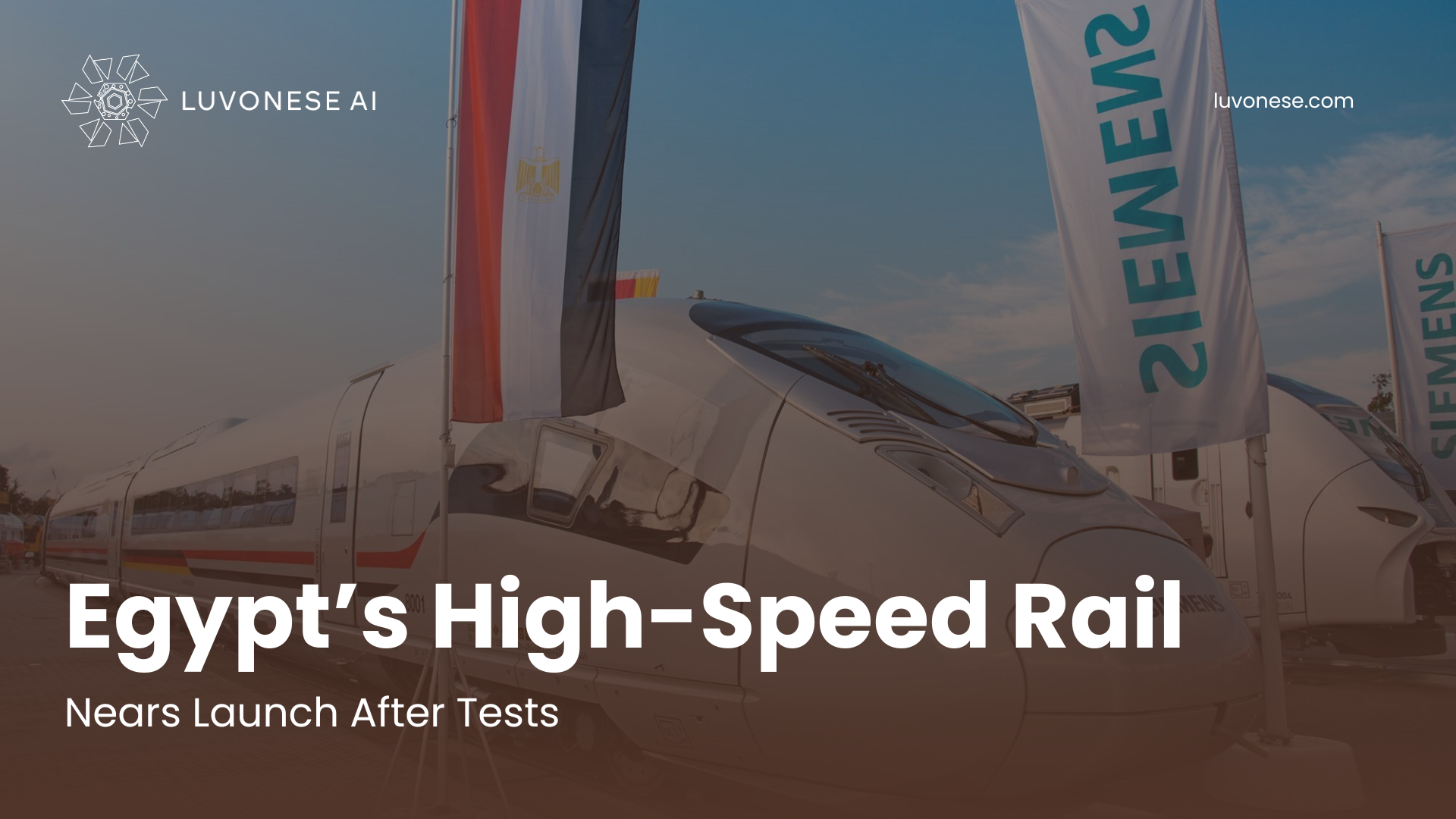
Egypt is moving closer to a transport revolution. After years of planning, the country has unveiled its first Siemens Mobility high-speed trainsets—Velaro and Desiro models—and successfully completed initial test runs.
While the full network is still under construction, this milestone signals a turning point in Egypt’s ambition to build one of the largest high-speed rail systems in the world.
The project, which spans more than 2,000 km once complete, aims to reshape mobility, strengthen regional connectivity, and modernize the nation’s infrastructure. Siemens Mobility
The Project Is Not Fully Launched Yet — But Testing Has Begun
A common misconception is that Egypt’s high-speed railway has already opened to passengers.
In reality:
- Egypt has received its high-speed Velaro trains
- Test runs have successfully taken place
- Full passenger service will launch when segments of the network finish construction
This phase marks the transition from engineering to real-world operation, a key indicator that progress is accelerating.
What Egypt’s High-Speed Network Will Look Like
Once complete, Egypt’s high-speed rail system will consist of three major lines, connecting:
- The Mediterranean
- The Red Sea
- Cairo
- Alexandria
- New Administrative Capital
- Upper Egypt
- Tourist hubs like Luxor & Aswan
The goal?
To cut travel times dramatically, reduce highway congestion, and strengthen Egypt as a commercial and logistics hub between Africa, the Middle East, and Europe.
Siemens Velaro & Desiro — Built for Speed and Egypt’s Climate
The newly unveiled trains include:
Velaro High-Speed Train
- Max speed: 250 km/h
- Fully electric
- Designed for desert conditions
- Wi-Fi, information systems, business & family cabins
Desiro Regional Train
- Supports high-density routes
- Run on electrified and hybrid networks
- Focus on short-to-medium distance connections
Siemens engineered both models to resist Egypt’s heat, humidity, sand, and long-distance dust exposure—a challenge most European systems don’t face.
Siemens Mobility
Transforming How Egypt Moves
Egypt’s transport modernization has long been overdue.
If the network reaches completion, it could:
- Reduce travel times by over 50%
- Lower fatal road accidents
- Expand tourism access
- Support new economic zones
- Provide eco-friendly alternatives to buses and cars
High-speed rail also aligns with Egypt’s Vision 2030 program, which prioritizes sustainability and economic diversification.
Industrial Growth & Local Development
This isn’t just about trains—it’s about industrial capability.
The project brings:
- New factories
- Local assembly lines
- Technology transfer
- Thousands of engineering & maintenance jobs
Egypt’s long-term goal is to build domestic expertise so future expansions can rely less on foreign contractors and more on homegrown talent.
Challenges — and What’s Still Ahead
Large-scale megaprojects rarely run without obstacles. Egypt faces:
- Massive budget requirements
- Complex desert construction
- Coordination between government & global partners
- Long testing and certification timelines
But the successful test runs demonstrate that the framework is solid, and momentum is increasing.
What This Means for Egypt’s Future
The introduction of high-speed rail technology positions Egypt as a regional mobility leader.
While countries like Morocco and Saudi Arabia have taken early steps, Egypt’s 2,000-km plan is far more ambitious—potentially the most extensive high-speed system in Africa and the Arab world.
For citizens, it could mean faster commutes, new job opportunities, easier travel, and safer long-distance transportation.
Final Thoughts
Egypt’s high-speed railway is not fully operational yet, but the unveiling of the Siemens Velaro and Desiro trains—and their successful first test runs—mark a pivotal moment in the country’s modernization journey.
The project is a symbol of ambition: a move toward cleaner mobility, stronger regional ties, and a future where transportation is faster, safer, and more sustainable.
Explore more breaking updates and thoughtful reports on world events, business, and technology at Luvonese.com