
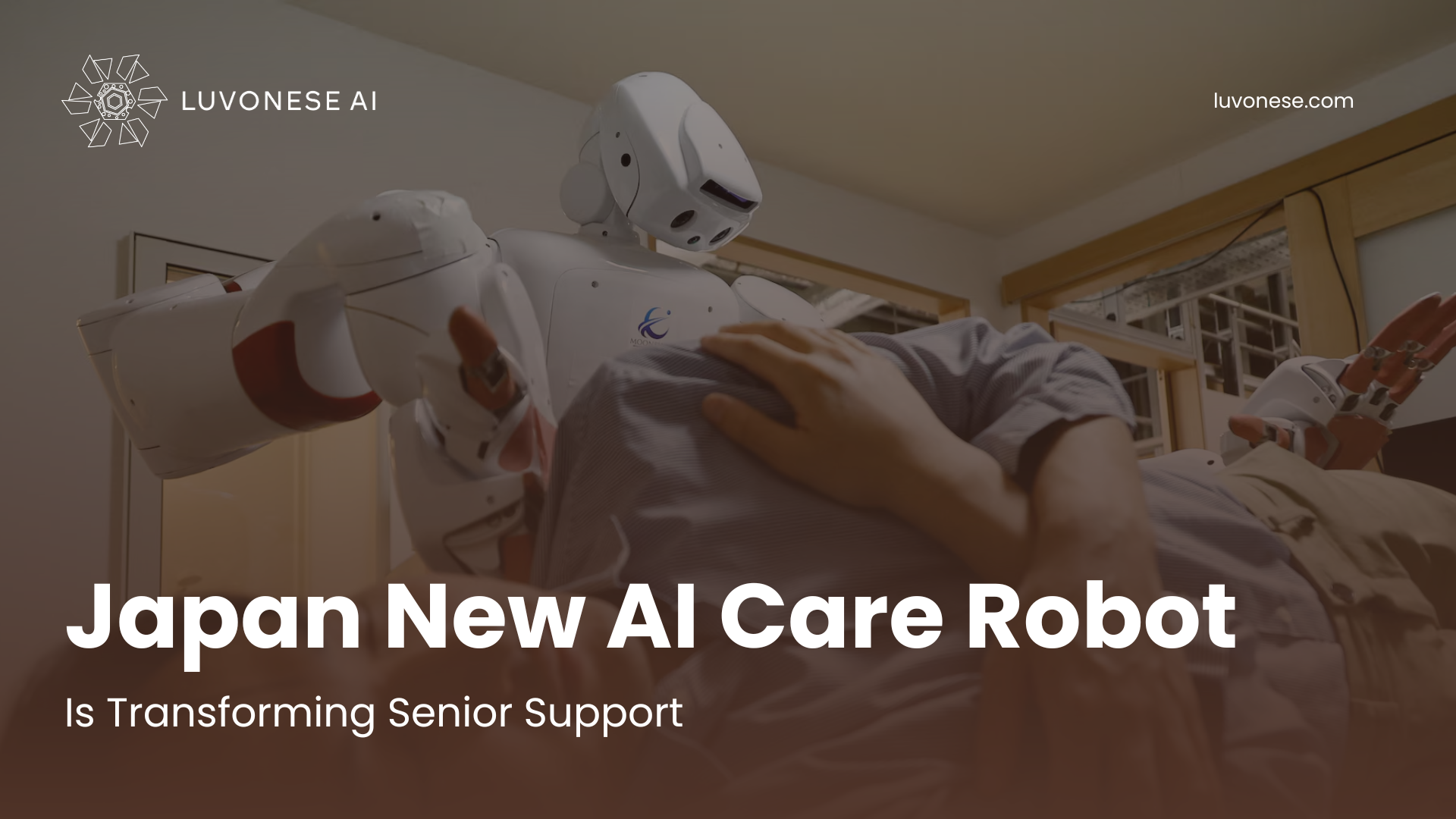
Japan is entering a new era of senior care. As its population ages faster than any other major nation, engineers and researchers are developing advanced AI care robot designed to bring safety, comfort, and independence to elderly individuals at home. These robots aren’t built to replace caregivers—rather, they are designed to support them, offering continuous, reliable assistance throughout the day.
Japan’s Push for AI in Elderly Care
With nearly one-third of Japan’s population now over 65, the need for innovative care solutions has become urgent. Human caregivers are in short supply, and many families struggle to balance work, personal life, and full-time caregiving responsibilities. AI robotics offers a scalable way to fill these gaps.
Japan’s latest AI robot for senior care combines mobility, natural conversation, and intelligent monitoring. It can navigate around the house, answer simple questions, remind seniors about daily tasks, and alert family members if something seems wrong.
How the AI Robot Works
This AI robot is equipped with sensors, microphones, and vision systems that allow it to understand routines and respond to spoken commands. It gently prompts seniors throughout the day—encouraging hydration, reminding them of medications, or suggesting a quick stretch or breathing exercise.
Because it uses machine learning, the robot gradually becomes more personalized. It learns when the user usually wakes up, when they prefer meals, and what tone of reminders they respond best to.
A Growing Need for Smarter Care Solutions
The World Health Organization estimates that the global population of adults aged 60+ will reach 2.1 billion by 2050. The pressure on families and healthcare systems will only increase.
Japan’s investment in robotics is a response to this challenge. By giving seniors consistent support—24 hours a day—AI robots help reduce risks, improve well-being, and relieve stress for caregivers.
Key Features of Japan’s AI Senior Care Robot
The robot focuses on three major roles: daily assistance, emotional support, and safety monitoring.
Daily Assistance
-
Medication reminders
-
Hydration and meal check-ins
-
Guided movement or stretching
-
Simple household alerts (lights left on, doors open)
Emotional Support
-
Light conversation
-
Music or audiobook playback
-
Daily affirmations
-
Check-ins asking how the user feels
Safety Monitoring
-
Fall detection
-
Inactivity alerts
-
Night-time home checks
-
Notifications to families or caregivers
These features help seniors remain more independent while giving families peace of mind.
Companionship Without Replacing Human Connection
One of the biggest risks for older adults is loneliness. Many seniors live far from family or spend long hours alone. While AI cannot replace genuine human interaction, Japan’s care robot can help ease long periods of silence and provide friendly engagement.
It can initiate small talk, encourage movement, and offer comforting presence. Even small interactions—asking about their day or suggesting a favorite song—can make seniors feel less isolated.
Integrating the Robot Into Daily Life
A typical day with Japan’s AI robot might look like this:
-
Morning: Medication reminder, hydration prompt.
-
Midday: Ask about lunch, suggest light exercise.
-
Afternoon: Offer music, check household safety.
-
Evening: Dim lights reminder, door check, bedtime routine support.
This steady rhythm helps seniors follow healthy routines while caregivers focus on more meaningful emotional or medical support.
Privacy, Consent, and Ethics
Because these robots use sensors and sometimes cameras, privacy is a major priority. Families must understand what data is collected, where it is stored, and how it is protected.
Japan’s developers are increasingly adopting privacy-first design: encryption, limited data retention, and clear user controls. Seniors or families can disable certain features or set boundaries on what the robot monitors. Ethical robotics guidelines from organizations like IEEE Spectrum emphasize transparency and consent—especially for vulnerable communities.
Benefits for Families and Healthcare Providers
For families, the AI robot means constant support—something most households simply cannot provide on their own. Instead of worrying throughout the day, they can receive updates when needed and focus on connecting emotionally when they visit.
For professional caregivers, the robot serves as an early warning system. It can record behavior changes, monitor mobility patterns, and highlight risks that might otherwise go unnoticed.
Healthcare providers can use this data to develop better care plans, track progress, and intervene earlier when health declines.
A Look Into the Future of Senior Care
Japan’s AI senior care robot is a preview of what aging could look like worldwide. As technology advances, we will see robots with more natural conversation, better movement, improved emotional intelligence, and deeper integration with health devices.
The goal isn’t to replace humans, but to make caregiving sustainable—supporting dignity, independence, and peace for older adults.