A New Chapter in Humanity’s Return to the Moon (NASA Artemis 2025)
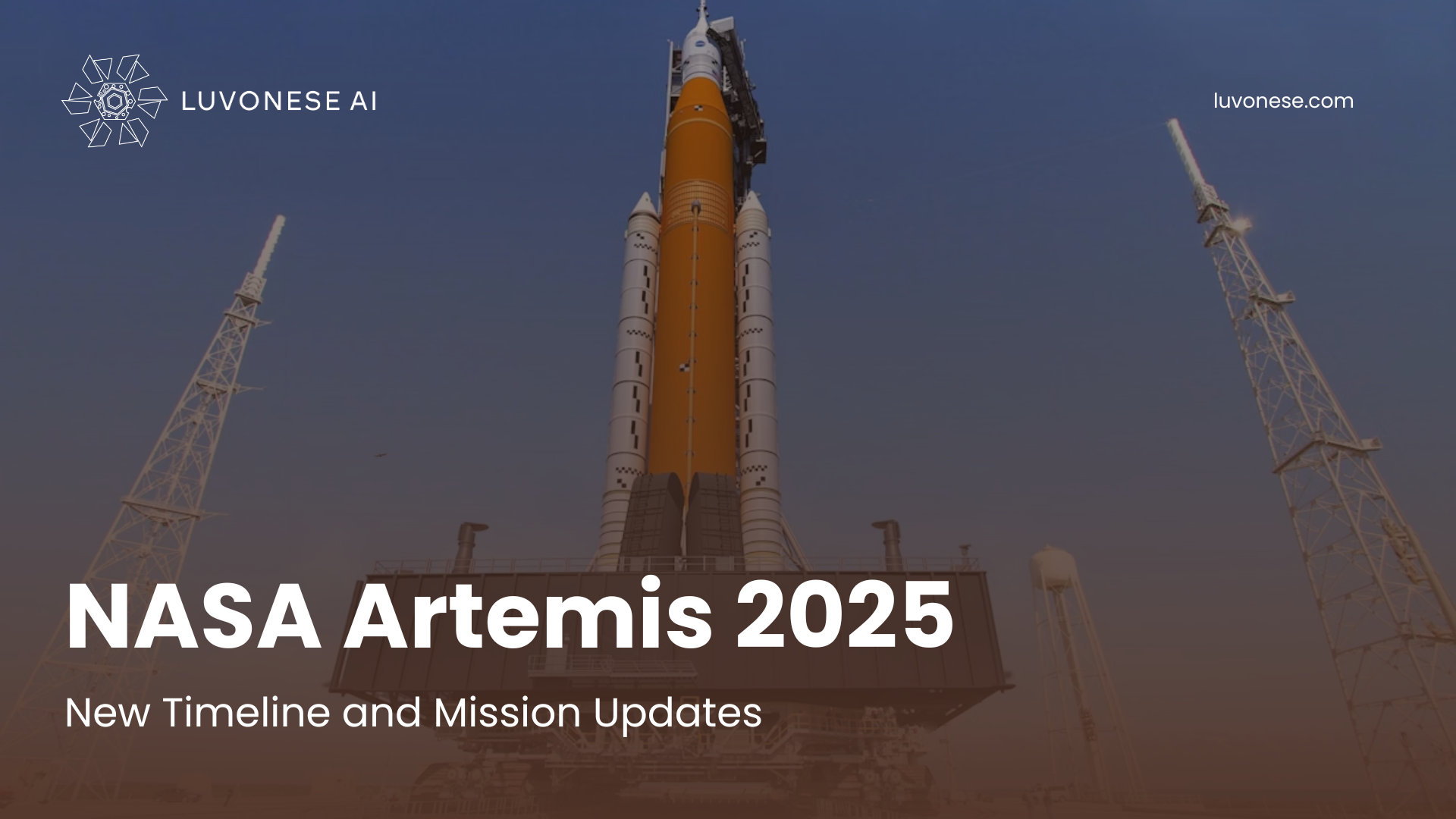
NASA’s Artemis program continues to evolve, and the latest updates for 2025 reveal a clearer roadmap for returning humans to the lunar surface for the first time since 1972. As the world anticipates a new era of space exploration, the Artemis missions aim to establish sustainable lunar operations, test deep-space technologies, and prepare for the long-term goal: sending humans to Mars.
Understanding the Artemis Program
The Artemis initiative is built around a multi-mission plan involving advanced spacecraft, powerful rockets, international partnerships, and cutting-edge science goals. Artemis I successfully completed an uncrewed flight around the Moon, while Artemis II — the first crewed mission — will test Orion systems with astronauts onboard.
Artemis III and IV will be the milestone missions that attempt the first human lunar landing in more than 50 years.
Updated Timeline: What’s New for 2025
NASA’s 2025 update includes several major scheduling changes. The agency has:
-
Adjusted Artemis II timelines to allow more safety testing
-
Refined Artemis III landing targets based on lunar conditions
-
Integrated new hardware delivery dates for the Gateway lunar outpost
-
Expanded collaboration with commercial partners for lander development
These adjustments ensure mission safety, reliability, and long-term sustainability.
Astronaut Training Ramps Up
Astronaut crews selected for the Artemis missions are undergoing intense training across several disciplines:
-
Deep-space survival simulations
-
Lunar EVA (extravehicular activity) practice
-
Orion spacecraft control training
-
Zero-gravity maneuvers
-
Habitation protocols for future long-duration missions
By 2025, NASA aims to have all crew fully certified for deep-space operations.
The Orion Spacecraft: Enhanced Systems
Orion remains the core of the Artemis missions. For 2025, NASA has confirmed several upgrades:
-
Improved thermal protection
-
New optical navigation enhancements
-
Updated communication systems
-
Refined life-support architecture
These improvements will boost safety for long-duration flights and enable better navigation during lunar orbit insertion.
The Space Launch System (SLS) Evolves
NASA’s SLS rocket — the most powerful rocket ever built — plays a critical role in launching astronauts toward the Moon. The 2025 update highlights enhancements for the Block 1B variant, including:
-
Increased payload capacity
-
Improved booster performance
-
More efficient fuel systems
These upgrades are essential for carrying crew, cargo, and future lunar base components.
Building the Lunar Gateway
One of the biggest developments for 2025 is the steady progress on the Lunar Gateway — a small, orbiting lunar space station that will act as a transfer point for astronauts traveling to the Moon’s surface.
New updates include:
-
Delivery of the Power and Propulsion Element (PPE)
-
Completion of the HALO (Habitation and Logistics Outpost) module
-
International contributions from ESA, JAXA, and CSA
Gateway will support science research, docking operations, and future Mars-bound missions.
Science Goals: What Artemis Will Study
NASA has outlined new scientific priorities for 2025, such as:
-
Studying lunar ice deposits for future fuel production
-
Collecting geological samples from unexplored regions
-
Testing long-duration power systems
-
Measuring radiation exposure for deep-space travel
These science objectives will help pave the way for a sustainable lunar presence.
Why the Artemis Mission Matters
Artemis is more than a return to the Moon — it represents a new era of exploration. The program aims to:
-
Establish a sustainable lunar base
-
Inspire technological innovation
-
Expand international cooperation
-
Prepare humanity for the first crewed Mars mission
NASA sees the Moon as a stepping stone, not a final destination.
What Comes After 2025?
The Artemis missions beyond 2025 include expanded lunar operations, robotic landers, and deeper space research. NASA also plans broader commercial partnerships to build infrastructure such as lunar habitats, power stations, and scientific laboratories.
Humanity is closer than ever to living and working on another world.
Need a Professional Website, Strong Branding, and Effective Marketing?
Luvonese Agency delivers complete digital solutions to help your business grow, from Website Design & Development, SEO Optimization, Social Media Advertising, Google Ads, Brand Identity, to Mobile App Development.
Build a strong online presence, attract the right audience, and scale your business with a team that understands modern digital strategy.
Grow Your Digital Business Today → Luvonese.agency
Boost Your Productivity with Luvonese AI
Luvonese AI transforms the way you work. Research faster with Chat AI, manage tasks like Notion/Monday, take AI-powered notes, plan agendas with Google Calendar sync, and organize ideas visually using our AI Visual Board.
Powered by leading AI models — GPT, Gemini, LLaMA, and more — Luvonese AI keeps everything in one smart, seamless workspace so you can focus on thinking, creating, and executing.
Try Luvonese AI 100% Free → Luvonese.com