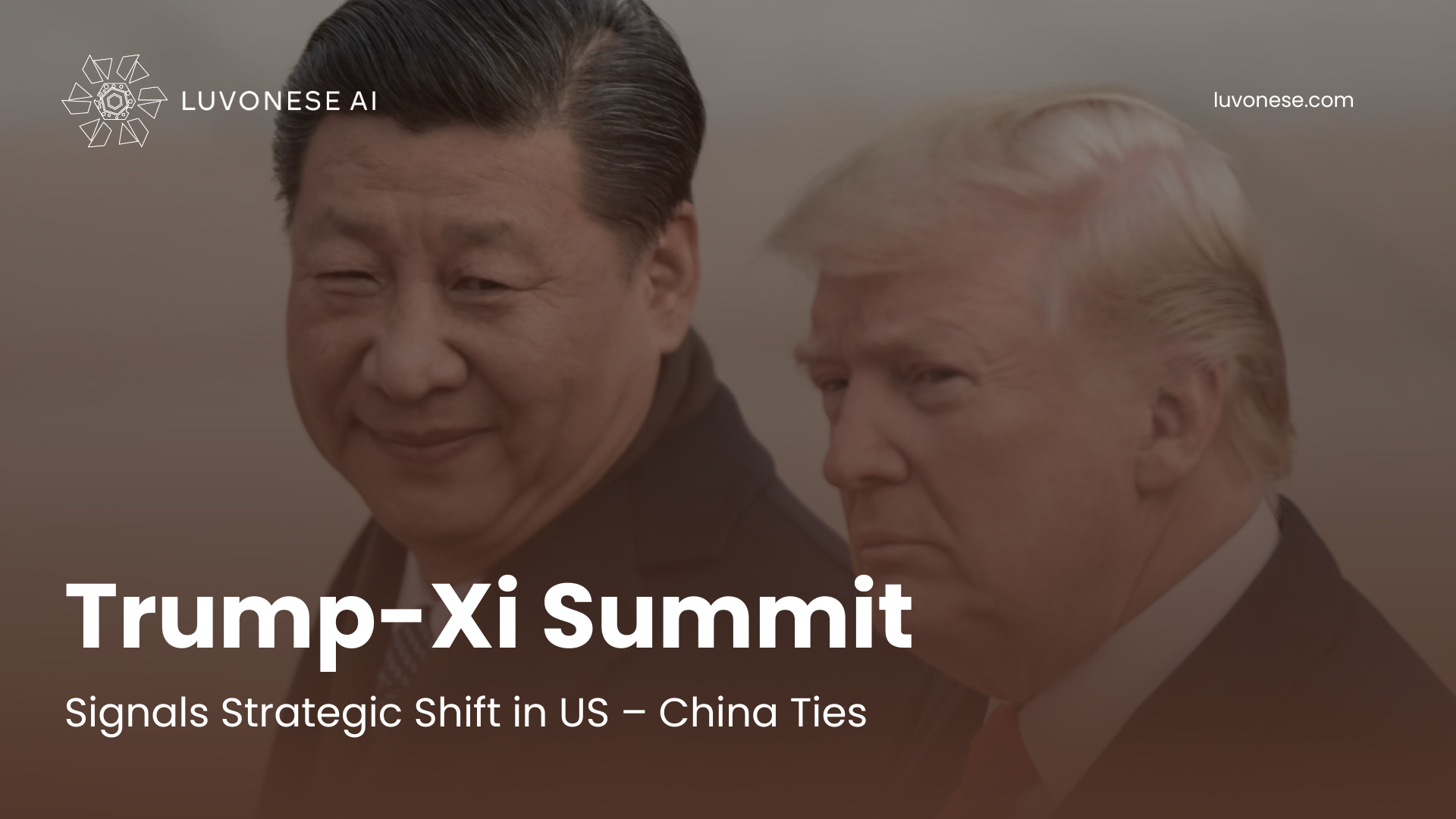
When Donald Trump and Xi Jinping sit down for talks, the world doesn’t just watch — it waits. Their meeting is often portrayed as a photo-op, but beneath the surface lies a pivotal juncture between two global powers whose decisions ripple across supply chains, technology standards, and military alliances. In late October 2025, the summit between U.S. President Trump and China’s leader Xi Jinping carried exactly that weight. Reuters
In this article, we unpack eight key dimensions of the summit: what led up to it, what’s on the table, who stands to gain (or lose), and what it means for businesses
What Brought Trump and Xi Together?
The meeting between Trump and Xi reportedly took place in Busan, South Korea, on the sidelines of the Asia‑Pacific Economic Cooperation (APEC) Summit. China’s foreign ministry confirmed “in-depth communications on strategic and long-term issues.” Reuters
Key drivers:
- Escalated trade friction — tariffs, rare earth export controls, and tech sanctions. The Guardian
- Political optics: both leaders under pressure domestically to portray strength on China-U.S. competition.
- Global markets: Investors were closely watching for signs of easing tensions.
Top Agenda Items: Trade, Tech and Taiwan
The agenda is broad and high-stakes. Among the headline issues:
- Trade and tariffs — China’s rare-earth export controls and U.S. retaliatory tariffs are front-of-mind. TIME
- Technology — Controls on semiconductors, investment restrictions, and U.S. concerns about Chinese apps and platforms.
- Taiwan and regional security — While trade dominates, the Taiwan Strait remains a potential trigger for deeper conflict. Axios
What’s at Stake for the U.S.
For the U.S., this summit represents both opportunity and risk. On one hand, a deal could ease supply-chain disruptions, open Chinese markets and calm volatile trade tensions. On the other, concessions may be minimal and long-term structural challenges remain unchanged.
Some analysts suggest that despite media focus on a “grand bargain”, what we’re likely to see is a series of incremental steps rather than a sweeping agreement. TIME
What’s at Stake for China
From Beijing’s perspective, the meeting is an opportunity to assert China’s rising influence and reset the narrative of competition with the U.S. Xi Jinping has consolidated leadership tightly and China’s economic strategy increasingly emphasizes technological self-reliance. TIME
China can afford to negotiate from strength: controlling rare earth supply, leading in green-tech manufacturing, and leveraging global trade ties. At the same time, the U.S. remains a major market and China’s export-driven model is under pressure.
Business & Digital Implications for Agencies
For digital agencies like Luvonese, the summit signals several practical shifts:
- Global clients may rethink supply-chains and digital ecosystem dependencies. For example: rare-earths or chip supply uninterrupted means fewer technology disruptions.
- Social media, apps and data-governance strategies may be re-visited — especially if bilateral tech agreements emerge.
- Marketing strategies for multinational brands may need to adjust for changing trade regulations, regional tariffs, or shifts in consumer behaviour due to economic uncertainty.
Why Expectations Should Be Managed
Although the optics of the summit are impressive, several reasons suggest caution. One analysis warns: “Trump should lower expectations… at best, the key take-aways will be Beijing pausing export controls and signing off on TikTok-type terms in return for deferred tariffs.” TIME
In short: Bite-sized wins, not sweeping breakthroughs. And plenty of hard issues left unresolved.
What This Means For Luvonese’s Clients
At Luvonese, working with clients across geographies means anticipating change, not reacting to it. Based on the summit, we recommend:
- Conducting digital-risk assessments of global operations — including supply-chain, data, platforms.
- Incorporating flexibility in campaign planning — so shifts in regulations or trade policy don’t derail timelines.
- Educating client teams on geopolitical signals that affect digital assets, platforms and consumer sentiment.
Looking Ahead — The Long Game
This summit may not yield a headline-grabbing treaty, but it sets tone. In the months ahead:
- Watch for follow-up negotiations, working-group agreements, and smaller bilateral pacts rather than one big deal.
- Monitor regulatory and technological policy moves in the U.S. and China — e.g., data-governance, sanctions, export-controls.
- Prepare for modelling scenarios of U.S.–China decoupling in certain sectors, and align strategy accordingly.
Ultimately, for businesses and agencies alike, the world of digital commerce and media is becoming more interwoven with geopolitics.
If you’re looking to build a website, campaign or digital experience that’s designed for this evolving environment — one that anticipates change in policy, regulation and platform behaviour — we’d love to talk. Visit Luvonese.agency to explore how we can help you stay ahead.