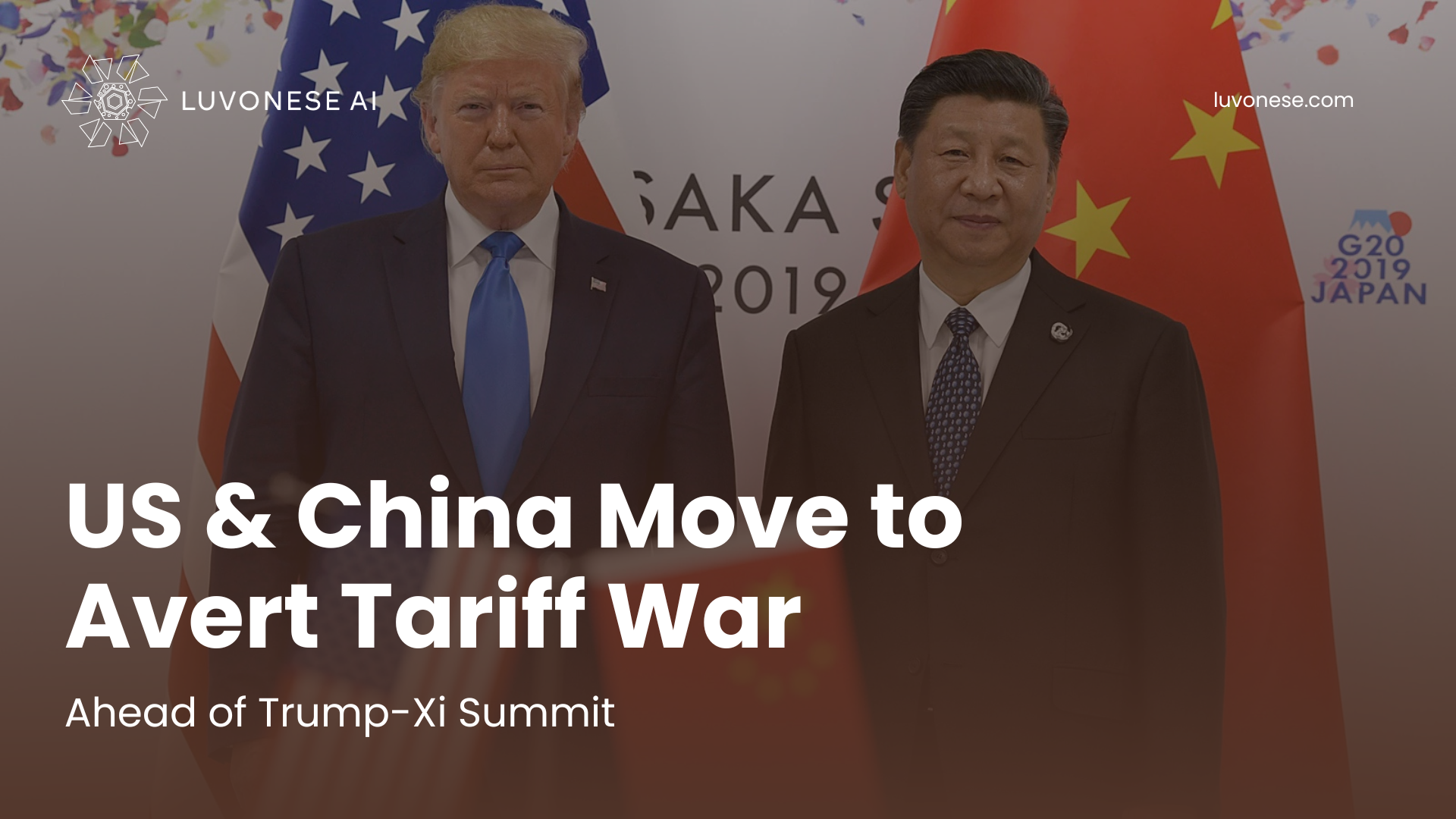
The United States and China have taken a major step toward de-escalating a simmering trade showdown by agreeing to a preliminary framework for a deal. The agreement, reached on the sidelines of the Association of Southeast Asian Nations (ASEAN) Summit in Kuala Lumpur, aims to avoid the imposition of 100 % tariffs by the US on Chinese imports and to delay China’s planned export controls on rare earths. This sets the stage for the highly anticipated summit between Donald Trump and Xi Jinping this coming week. Reuters
Framework Details: What Was Agreed
Key elements of the deal include:
- The US agreeing to stand down from imposing an immediate 100 % tariff on Chinese goods starting November 1. Reuters
- China agreeing to delay its planned export controls on rare‐earth minerals and magnets for up to a year, providing relief to the global supply chain for high-tech goods. Reuters
- Discussions to expand Chinese purchases of US agricultural goods, especially soybeans, which had faced a Chinese import halt. Reuters
Diplomatic Timing and Strategic Context
The framework was discussed and agreed upon during talks between US and Chinese economic teams in Kuala Lumpur. The negotiations occurred just days before the scheduled summit between Trump and Xi in South Korea, ahead of the Asia‑Pacific Economic Cooperation (APEC) meeting. Reuters
The timing reflects both sides’ recognition that a major confrontation would carry wide economic and political risks.
Why Avoiding a Tariff War Matters
Had negotiations failed, the US was prepared to slap 100 % tariffs on Chinese imports, while China threatened export curbs on critical minerals. Such moves had the potential to ripple across global manufacturing, especially in electronics and automotive sectors reliant on rare earths. Reuters
By reaching this framework, both nations have taken a step back from the brink of a global trade escalation.
Rare Earths, Critical Minerals and Technology Supply Chains
One of the most pressing concerns in the talks was China’s dominance in rare-earth processing and export controls. These minerals feed into electric vehicles, defence systems and smartphones. China’s agreement to delay controls gives the US and its allies breathing room to diversify supply chains. Reuters
The issue goes well beyond tariffs—it touches strategic high-tech competition.
Agricultural and Domestic Political Implications
US farmers, especially soybean producers, have suffered amid China’s import slowdown. Under the new framework, China’s renewed purchases of US soybeans would mark a significant political win for the Trump administration. Reuters
Domestic pressure in the US to secure such deals is high, and this framework addresses that directly.
What Still Remains Unresolved
While the framework signals progress, it is not yet a final deal. Both sides still need to work out details on investment, intellectual-property protections, enforcement mechanisms and future export controls. China’s negotiators have described the outcome as a “preliminary consensus”. Reuters
The upcoming summit will test whether commitments turn into concrete outcomes.
Market & Global Economic Impact
The prospect of US and China moving away from trade conflict brought some relief to markets. For example, the US dollar strengthened versus the yen amid optimism that the tariff threats may be contained. Reuters
A trade war between the world’s two largest economies would have had far-reaching implications for global growth.
Looking Ahead to the Trump-Xi Summit
All eyes now shift to the upcoming summit between Trump and Xi, where this framework is expected to be formalised or expanded. Should they succeed, it could mark a turning point in their trade relations. Should they falter, the risk of renewed escalation remains. Politico
The outcome may shape not only bilateral ties, but the broader global trade order.
Conclusion
The newly agreed framework between the US and China represents a strategic retreat from an escalating trade confrontation and a possible reset in their economic relationship. While not a full deal, it buys time and signals seriousness on both sides. The upcoming summit will determine whether that signal turns into substance. For global markets, manufacturers and farmers alike, this could be an important turning point—but only if both nations follow through.